Posts

Showing posts with the label Easter

Saint Anselm of Canterbury

Image
Anselm was born of noble parents in Piedmont (Italy) around the year 1033. At the age of twenty-seven he entered the English Benedictine abbey of Bec, where he became abbot in 1078. As abbot, he gained renown for his preaching and reforming spirit. In 1093, he succeeded his former teacher, Blessed Lanfranc , as Archbishop of Canterbury. Anselm soon found himself at odds with King William Rufus, whose unjust policies compelled Anselm to leave England. After traveling to Cluny and Rome, the Anselm returned to England only after he had received word of the king’s death. Conflicts with the new king caused him to flee to Rome where Pope Paschal II defended Anselm’s claim to authority over the English church. In 1106, he returned to Canterbury, where he died on April 21, 1109. Known as a man of recollection and erudition, Anselm’s writings have had a profound impact on Catholic thought and he has been called the “Father of Scholasticism.” Especially remembered for his Prosologion , the ...
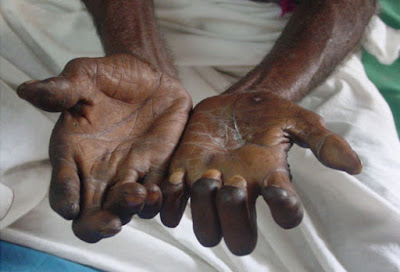
Thursday of the Octave of Easter: Discerning God's Handiwork

Image
Shortly after he arrived at a compound for patients of Hansen’s Disease (a leper colony) in India, Doctor Paul Brand , a specialist in hands and tendons, quietly slipped into a community meeting, sitting on a mat behind the group in the courtyard. All around were smells of disease and decay, of cooking spices, and medical ointments. His eyes were drawn to the patients’ hands, most of which had missing or deformed fingers that were turned in—hands that were often called “lepers’ claws.” Some of the patients were sitting on their hands or trying to keep them hidden. When the patients realized Doctor Brand was there, they asked him to speak. So, moving to the center of the group, he began by saying, “I am a hand surgeon. So, when I meet people, I can’t help but look at their hands. [Palm readers claim] that they can look at your future by looking at your hands. I can tell your past. For instance, I can tell what your trade has been by the position of the callouses and the condition...

Good Shepherd Sunday

Image
Jesus said: “I am the good shepherd. A good shepherd lays down his life for the sheep.” —John 10:11 This Sunday, which is also World Day of Prayer for Vocations, is a time set aside each year to pray, in a special way, for an increase in vocations to the priesthood, permanent diaconate, and consecrated life. The Church needs ministers who are willing to give their lives in service and prayer for the sake of the Gospel.   The Good Shepherd from the Catacomb of Priscilla in Rome (250-300) Today, as I offer my own prayers for those who are discerning God’s call, I was especially struck by the first line of the Gospel of this Sunday’s Mass (quoted above). This sentiment is echoed in Pope Francis’ Message for the 52nd World Day of Prayer for Vocations : “To offer one’s life in mission is possible only if we are able to leave ourselves behind… At the root of every Christian vocation we find this basic movement, which is part of the experience of faith. Belief means t...

To Be a Witness

Image
In classes and days of recollection I offer during Lent, I often remind participants that the purpose of Lent is twofold: it is the time of final preparation of the uninitiated (i.e. catechumens) for baptism and the time for Christians to recall their own baptism and they prepare to renew their baptismal promises on Easter Sunday. Unfortunately, this second aspect of Lent often gets lost. Yes, we all renewed our baptismal promises at Easter and were symbolically sprinkled with holy water, but, for most of us, that moment seems to be over as soon as it has begun and we don’t really appreciate the significance of the act… which is surprising since we’ve spent 40 days preparing to say “I do!” with a renewed mind, heart, and spirit. We renew our baptismal promises each year because conversion and growing in faith are lifelong processes. In saying that, I simply mean that each moment of every day (not just the days of Lent) offers us infinite possibilities for experiencing grace, for cho...

The Morning After

Image
In The Dwelling of the Light , a reflection on icons of Christ, RowanWilliams (the former archbishop of Canterbury), reflecting on the icon tradition of the Eastern Church, wrote,  Orthodox theologians have said—surely rightly—that the moment of resurrection could not be depicted, any more than you could depict the moment of creation or the moment of incarnation. You cannot paint a picture of the simple act of God… You can only show the effect of God’s action: the creation itself carrying the mystery of God in its very being, the human situation transformed by God. So you can depict the Risen Christ, but not the event of the resurrection… So the classical Easter icon shows something more than an historical event: it shows, you might say, the effect of God’s action on human history up to that point, and implicitly, the effect of God’s action on all history. Just as the transfiguration icon shows the light of Jesus’ presence illuminating Moses and Elijah, this icon sho...

Keeping Lent Real

Image
In his Rule , Saint Benedict observes that "the life of a monk ought to a continuous Lent" (from chapter 49 ). Those words might strike some as harsh, but why is that? Is it because we too quickly associate Lent with ash-smudged foreheads, "giving up" things we generally enjoy, fishy Fridays, and lots talk about guilt and sin? The insight that we can gain from Saint Benedict's perspective is that the spirit of Lent is something that should permeate our lives every day of the year. And, by saying that, I don't mean the doom-and-gloom that too many associate with this season. Instead, Saint Benedict was saying that our Lenten emphasis on ongoing conversion and covenant is something we should carry with us each day, because conversion and covenant are at the heart of our commitment to follow Christ. This can only make sense for us today if we try to remember that Lent was originally a 3-day time of fasting and prayer for those who would be baptized at East...

If You Love One Another

Image
During the Last Supper, Jesus gave his Apostles a very specific instruction: “Love one another. Just as I have loved you, you also should love one another” (John 13:34). These words, spoken to his closest companions on the night before he was to offer his life for them, are not just a pious admonition. Instead, they are an indication that Jesus’ sacrifice was itself an act of love (cf. Jn 13:1 ), and an example of the way they should love one another: “In this way, all will know that you are my disciples, if you have love for one another" (Jn. 13:35).   Crucifixion by Rembrandt     Reflecting on this love, Father Romano Guardini wrote: Love proceeded from Him everywhere. We encounter love all about Him. But we want to seek it out in the flaming, radiant center. Love is what He showed toward the delicate blossoming of His Father’s creation, when He speaks of the lilies of the field, and how God has clothed them more magnificently than Solom...