Posts

Showing posts with the label stewardship

Giving Away? Giving Up? Give Over.
Image
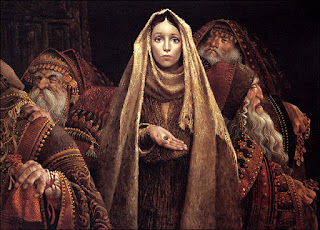
This Sunday we hear the story of the "generous widow." While we most often focus on the widow's generous spirit, this story is really a lesson in discipleship. "Ultimately, this story of the “widow’s mite” isn’t about the size or amount of the gift. Instead, Jesus is reminding us that his disciples will be known not by what they give away or give up but by how they give over all that they are to God and to those around them, simply because they love." To read the full reflection, click here . On a personal note, I want to offer a word of thanks for the prayers and good wishes I have received since sharing my news of being accepted as a candidate for the Society of the Divine Savior (the Salvatorians). To read my original posting, click here .

A Communion of Saints

Image
The Second Letter to the Thessalonians, which is among the source texts used for the Readings of the Thirty-Second Sunday of Ordinary Time (Cycle C) is something of a problematic biblical text. Although it has traditionally been attributed to Saint Paul, writing with Saint Barnabas and Saint Silvanus/Silas (cf. 2 Thess 1:1 ), most modern scholars believe that this text (among others) was written several years after Paul’s martyrdom. Whether this letter was written by Paul or by those who had been formed by the Apostle is, however, in many ways irrelevant to the meaning of the text for the Church today. The text itself, which was certainly known to Marcion and Saint Polycarp (in the mid-second century), describes a local community that was experiencing persecution or dangers from heretical (i.e. gnostic) movements and which was at danger of losing its focus on the Faith that Paul and his collaborators had handed over to the community by their preaching and witness (cf. Raymond Brown,...

God and Mammon: A Lesson in Stewardship

Image
There is a well-known phrase that is often used as a sort of “proof text” against the vice of greed: “You cannot love both God and money.” At the surface, God and money aren’t incompatible. In fact, Saint Augustine even encouraged people to provide for their eternal happiness by using the goods of the earth (cf. Discourses 359, 10). But the parable of the dishonest steward, from which this quotation is adapted, doesn’t use the word “money” (which does appear in certain popular translations of Scripture). Rather, the word used in the parable is “mammon,” a Phoenician term for economic security and success in business. Reflecting on mammon , Pope Emeritus Benedict XVI said, “we might say that riches are shown as the idol   to which everything is sacrificed in order to attain one’s own material success; hence, this economic success becomes a person’s true god.”   The Dishonest Steward from  Evangelicae Historiae Imagines (1594)   More than just making an ...