Posts

Showing posts with the label John Paul II

The Second Sunday of Ordinary Time (Cycle B, 2021)

Image
John was standing with two of his disciples, and as he watched Jesus walk by, he said, “Behold, the Lamb of God.” The two disciples heard what he said and followed Jesus. —John 1:35-37 If you’re anything like me, the recent celebrations of Epiphany and the Baptism of the Lord have already faded into memory. I find myself continually distracted by the ceaseless news cycle, the unrest across the nation, the continuing devastation being wreaked by the coronavirus pandemic, as well the “quick succession of busy nothings” of my own life (to borrow a phrase from Jane Austen). And now, here we are in Ordinary Time again, with a very adult Jesus in the early days of his ministry. The Gospel assigned for the Second Sunday of Ordinary Time opens with John the Baptist in conversation with some of his disciples. In a sense, John helps to form a bridge between Advent and Christmas and these first days of Ordinary Time (see Pope Francis, Angelus Address for January 14, 2018). John will...

For the Solemnity of Mary, Mother of God and the World Day of Peace (2021)

Image
The shepherds went in haste to Bethlehem and found Mary and Joseph, and the infant lying in the manger. When they saw this, they made known the message that had been told them about this child. All who heard it were amazed by what had been told them by the shepherds. And Mary kept all these things, reflecting on them in her heart.   —Luke 2:16-19 To call Mary the Theotokos , the "Mother of God " or “God-Bearer,” is to celebrate the unique role that she has played—and continues to play—in God’s plan of salvation. And as we honor the Theotokos in our celebration of the Solemnity of Mary, Mother of God, on January 1, we also celebrate the Octave Day of Christmas, recalling the circumcision and naming of Jesus on the eighth day after his birth (cf. Luke 2:21).  A contemporary icon of Mary, "Seeker of the Lost" The iconic Christmas image of Mary holding her infant Son embodies the mystery of the Lord’s birth, as it brings together the human and divine elements of the In...

For the Fourth Sunday of Advent (Cycle B, 2020)

Image
  Mary said, "Behold, I am the handmaid of the Lord. May it be done to me according to your word." —Luke 1:38 The Gospels do not relate a single word spoken by Joseph, the husband of Mary. He is a silent, protecting figure standing in the shadows during the Season of Advent, coming into view only in the final days of this season of watching and waiting. And, while we do hear from Mary in the gospels of Luke and John, few of her words have come down to us.  Despite the fact that we hear so little from the parents of Jesus, we can nevertheless recognize one particular virtue that both shared: obedience.  “Obedience” isn’t a particularly popular word in our culture, including within the Church. Sadly, too many people have to come to associate obedience with some sort of blind submission. Instead, if we look at the history of the word, we see that it comes from two Latin words, ob and audire , and our English word “obedience” means to listen or to hear.  This sense of l...

For the 25th Sunday in Ordinary Time (Cycle A, 2020)

Image
 " He said to one of them in reply, 'My friend, I am not cheating you. Did you not agree with me for the usual daily wage? Take what is yours and go. What if I wish to give this last one the same as you?'" —Matthew 20:13-14 Even before the outbreak of the pandemic-when employment and economic uncertainty weren't as widespread as they are now-it wasn't uncommon to see groups of men and women standing in groups in the parking lots of hardware and home improvement stores like Home Depot and Lowes. I never gave them much thought until a friend explained who they were: these were day laborers who were hoping that a contractor or someone needing help with a home repair project would hire them for the day or, at the least, for a few hours.   These people are continuing a tradition that is found in nearly every culture and, as we see in this Sunday's Gospel , was certainly common in Jesus’ day. One of my Salvatorian confreres who had worked in Arizona an...

For the 24th Sunday of Ordinary Time (Year A, 2020)

Image
Peter approached Jesus and asked him, "Lord, if my brother sins against me, how often must I forgive? As many as seven times?" Jesus answered, "I say to you, not seven times but seventy-seven times.” —Matthew 18:21-22 A Benedictine monk whom I greatly admire and who has also become a good friend through the years once said to me, “The kindest thing you can do for some people is to give them something to be angry about.” Although we laughed at his insight at the time, over the years I’ve realized there is truth in his words. Sometimes, some people just want something to be angry about. Sometimes we are just looking for a fight. Other times—and I’m guilty of this—we look for an excuse to justify the chip we already have on our shoulder. And, the fact of the matter is, we generally don’t have far to look to find something to be angry about. Anger is a reality in life. However, as we know, anger is like any other emotion and can ultimately be used for good or fo...

Corpus Christi: The Mission That Lasts Until the End of Time

Image
Just as the living Father sent me and I have life because of the Father, so also the one who feeds on me will have life because of me. —John 6:57 In 1928, Myles Connolly published a small novel entitled Mr. Blue , which tells the story of a young man who decides to live out the Christian Faith in a serious, transforming way. The book was intended to serve as a Christian response to F. Scott Fitzgerald’s classic work, The Great Gatsby . Blue lives a life of extremes, we might even say of excess, but it is a far cry from the extravagance of the “Roaring ‘20s.” Mr. Blue has much to say to us about how faith in Christ can shape a life, transforming a person’s very existence into an act of eucharistia  — an act of thanksgiving  — that by its very nature draws others into communion. In the novel, Blue tells the story about the kingdom of the Antichrist: the days of the “the ecstatic, passionate, beauty-loving, liberty-seeking people had, as was early predicted, come t...

Our Lady of Fatima: Honoring Mary in Prayer

Image
On the 13th day of May, we celebrate the Virgin Mary who appeared to three shepherd children at Fatima, Portugal, six times between May 13 and October 13, 1917. In these encounters, Mary identified herself as “Our Lady of the Rosary” and urged the practice of penance, daily recitation of the Rosary, and devotion to the Immaculate Heart for the conversion of sinners and of Russia.   On May 13, 2000, Pope Saint John Paul II beatified Jacinta and Francisco Marto , two of the visionaries. The commemoration of Our Lady of Fatima was extended to the Universal Church in 2002. Although there are many who focus on the signs and wonders associated with the apparitions at Fatima, Mary’s message to the children—and to us—is very simple: Pray! And our commitment to prayer—for the Church, for those entrusted to our care, for the poor and forgotten—are the greatest acts of devotion we can show to the Mother of God. Take time today to pray the rosary for those who have no o...

The Ascension: Jesus is Lord of All Times and Peoples

Image
As they were looking on, he was lifted up, and a cloud took him from their sight. While they were looking intently at the sky as he was going, suddenly two men dressed in white garments stood beside them. They said, “Men of Galilee, why are you standing there looking at the sky? This Jesus who has been taken up from you into heaven will return in the same way as you have seen him going into heaven.” —Acts 1:9-11 In her novel  Gilead , Marilyn Robinson shares the story of Reverend John Ames who, looking back on a life of pastoral service, love, loss, faith, and hope, tells his young son: Sometimes the visionary aspect of any particular day comes to you in the memory of it, or it opens to you over time. For example, whenever I take a child into my arms to be baptized, I am, so to speak, comprehended in the experience more fully, having seen more of life, knowing better what it means to affirm the sacredness of the human creature. I believe there are visions that come to us only i...

Saint Narcisa de Jesús: Watching for the Bridegroom

Image
Behold, the Bridegroom is coming; come out to meet Christ the Lord.    —Communion Antiphon for the Common of Virgins (based on Matthew 25:6) These Advent days are a time of joyful expectation, a time for watching and waiting. The Parable of the Ten Bridesmaids, the young women charged with waiting for the arrival of the bridegroom before for the wedding feast (see Matthew 25:1-13 ) is a fitting lesson for this holy season. Just like the women of the parable, we have a choice of preparing our lamps—our selves—to meet the Lord when he comes. We also, of course, have the option of living only in the moment, coasting along without paying attention to our responsibilities as disciples. On December 8, as we celebrate the Immaculate Conception of the Blessed Virgin, the Church also remembers Saint Narcisa de Jesús Martillo Morán, a woman who dedicated her life to watching for the Lord’s Coming just like the wise Bridesmaids in the parable. Born in Nobol, Ecuador, in 18...

Blessed Anton Maria Schwartz: "We Must Pray More!"

Image
Blessed is the man who fears the Lord, who greatly delights in his commands… Open-handed, he gives to the poor; his justice stands firm forever.    —Psalm 112:1, 9 As the citizens of the United States are already gearing up for the 2016 elections, we’re going to be hearing more about workers’ rights, labor unions, and the rights that immigrants have (or don’t have) to work or receive an education. This will all be in conjunction with the ongoing debates over raising the minimum wage that are currently taking place in many states. Added to the already tense political situation is the upcoming visit of Pope Francis, which is sure to be a watershed moment for the American Church, even as it ruffles the feathers of political conservatives and progressives alike. In its history, the Church hasn’t shied away from important social justice issues. In fact, it was Catholic leaders in the 19 th century that worked tirelessly in support of trade unions and fair wages and work...

Blessed Victoria Rasoamanarivo: Honoring Faithful Women

Image
We know that God makes all things work together for the good of those who have been called according to his decree. —Romans 8:28   When many of us think of saints, our minds most often go to European or American models of holiness. However, recent years have seen an explosion in the number canonizations and beatifications of women, men, and children from Asia, Africa, Australia, and the Pacific Islands. The small country of Madagascar (off the southeastern coast of Africa) has given the Church three new models of holiness since 2002, including Saint Jacques Berthieu , a French Jesuit missionary who was martyred in Ambiatibe in 1896, Blessed Jan Beyzym , a Jesuit missionary from Ukraine who died in Marana in 1912,   and Blessed Raphaël-Louis Rafiringa , a native-born Christian Brother who died in Fianarantsoa in 1919. But honored alongside these male religious is a remarkable laywoman and Church leader who was beatified more than a decade before her male counterpa...

Saints John and Paul: Remembering the Martyrs

Image
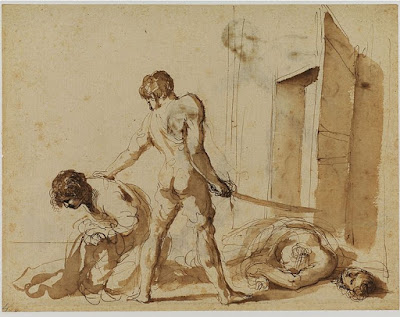
For if to others, indeed, they seem punished, yet is their hope full of immortality; Chastised a little, they shall be greatly blessed, because God tried them and found them worthy of himself. —Wisdom 3:4-5 The Roman martyrs simply known as John and Paul are among those early Christian saints whose stories have been somewhat obscured by time and myth, but they are among the most beloved saints of the early Church. Their names are included in the Roman Canon (the “First Eucharistic Prayer”) of the Mass and the Litany of the Saints , as well as in the liturgies of many of the Eastern churches. Their memory is celebrated on June 26. According to the accounts of their lives that have been handed down to us, John and Paul were Christian brothers and both served as soldiers in the Roman Army under the emperor Constantine . The brothers were assigned to serve in the household of Constantine’s daughter, Constantia . She held them in high esteem and even named one of the...