Posts

Showing posts with the label Pope Francis

For the Fourth Sunday of Ordinary Time (Cycle B, 2021)

Image
All were amazed and asked one another, “What is this? A new teaching with authority. He commands even the unclean spirits and they obey him.” His fame spread everywhere throughout the whole region of Galilee. —Mark 1:27-28 When many people hear the word “prophet,” they imagine someone who is essentially a divinely sanctioned fortune-teller. But, if we look at the full story of salvation as it is presented in the Bible, we recognize that prophets were just as concerned with the here and now as they were with the world to come. In fact, it was the prophets’ special mission to help the people recognize the truth about themselves and the world around them, especially calling them to the see how their words and actions impacted their relationships with God and others what the consequences of those words and actions might be. Prophets told the truth. Because of this, prophets were often hated, especially by people in power.   "Moses" by Michelangelo Buanarroti in the Church of San ...

The Second Sunday of Ordinary Time (Cycle B, 2021)

Image
John was standing with two of his disciples, and as he watched Jesus walk by, he said, “Behold, the Lamb of God.” The two disciples heard what he said and followed Jesus. —John 1:35-37 If you’re anything like me, the recent celebrations of Epiphany and the Baptism of the Lord have already faded into memory. I find myself continually distracted by the ceaseless news cycle, the unrest across the nation, the continuing devastation being wreaked by the coronavirus pandemic, as well the “quick succession of busy nothings” of my own life (to borrow a phrase from Jane Austen). And now, here we are in Ordinary Time again, with a very adult Jesus in the early days of his ministry. The Gospel assigned for the Second Sunday of Ordinary Time opens with John the Baptist in conversation with some of his disciples. In a sense, John helps to form a bridge between Advent and Christmas and these first days of Ordinary Time (see Pope Francis, Angelus Address for January 14, 2018). John will...

For the Solemnity of Mary, Mother of God and the World Day of Peace (2021)

Image
The shepherds went in haste to Bethlehem and found Mary and Joseph, and the infant lying in the manger. When they saw this, they made known the message that had been told them about this child. All who heard it were amazed by what had been told them by the shepherds. And Mary kept all these things, reflecting on them in her heart.   —Luke 2:16-19 To call Mary the Theotokos , the "Mother of God " or “God-Bearer,” is to celebrate the unique role that she has played—and continues to play—in God’s plan of salvation. And as we honor the Theotokos in our celebration of the Solemnity of Mary, Mother of God, on January 1, we also celebrate the Octave Day of Christmas, recalling the circumcision and naming of Jesus on the eighth day after his birth (cf. Luke 2:21).  A contemporary icon of Mary, "Seeker of the Lost" The iconic Christmas image of Mary holding her infant Son embodies the mystery of the Lord’s birth, as it brings together the human and divine elements of the In...

For the Feast of the Holy Family (Cycle B, 2020)

Image
Jesus went down with them and came to Nazareth, and was obedient to them; and his mother kept all these things in her heart. And Jesus advanced in wisdom and age and favor before God and man.   —Luke 2:51-52 Christmas is a time for family. Whether we are spending the holidays with our biological families, religious communities and parish families, or “chosen” families of friends, Christmas is a season when we come together with those whom we love to celebrate love, especially God’s love enfleshed in the gift of his Son. This truth of Christmas was brought into sharp focus this year, as the realities of the coronavirus pandemic kept us from being with our families and those we love.  Contemporary icon of the Holy Family  by Marko Ivan Rupnik, SJ (2012) The Feast of the Holy Family, celebrated on the Sunday within the Octave of Christmas, is an invitation to reflect on the lives and relationships of the Holy Family of Jesus, Mary, and Joseph, and on how God’s grace is at wo...

For the Fourth Sunday of Advent (Cycle B, 2020)

Image
  Mary said, "Behold, I am the handmaid of the Lord. May it be done to me according to your word." —Luke 1:38 The Gospels do not relate a single word spoken by Joseph, the husband of Mary. He is a silent, protecting figure standing in the shadows during the Season of Advent, coming into view only in the final days of this season of watching and waiting. And, while we do hear from Mary in the gospels of Luke and John, few of her words have come down to us.  Despite the fact that we hear so little from the parents of Jesus, we can nevertheless recognize one particular virtue that both shared: obedience.  “Obedience” isn’t a particularly popular word in our culture, including within the Church. Sadly, too many people have to come to associate obedience with some sort of blind submission. Instead, if we look at the history of the word, we see that it comes from two Latin words, ob and audire , and our English word “obedience” means to listen or to hear.  This sense of l...

Lucy, Odilia, and the Promise of Light

Image
Advent is a season of contradictions and juxtapositions.  This is the season of "already" but "not yet," as we prepare for the coming-in-fullness of the One who has already been born into time and history.  This is the dark season when we watch and wait from the dawning of the One who is  the Light of the World, lighting the candles of the Advent wreath and praying in the Magnificat antiphon for December 21:  O Radiant Dawn, splendor of eternal light, sun of justice:  Come, shine on those who dwell in darkness and the shadow of death.   This theme of light is a fundamental part of our prayer in these Advent days and we recall John the Baptist, the great prophet of Advent, testifying to the coming of this light (see John 1:6-9 ).  This is the light of the Lord that illumines the darkened heart of a sin- and war-weary world.  Reflecting on this, Quaker writer Isaac Pennington wrote, “But of what nature is this light, which shineth in man in his...

For the Immaculate Conception (December 8, 2020)

Image
I rejoice heartily in the Lord, in my God is the joy of my soul; for he has clothed me with a robe of salvation, and wrapped me in a mantle of justice, like a bride adorned with her jewels. - Isaiah 61:10, Entrance Antiphon for the  Solemnity of the Immaculate Conception When, in 1854, Blessed Pope Pius IX solemnly defined the Dogma of the Immaculate Conception of the Blessed Virgin Mary, he was giving full voice to an ancient and venerable tradition: “The Virgin Mary, in the first moment of her conception, by a singular privilege granted by Almighty God, in view of the merits of Jesus Christ, the Savior of the human race, was preserved free from all stain of original sin” ( Ineffabilis Deus ).  Although it might seem out of place in the quiet, dark procession of these Advent days, this celebration of the Immaculate Conception, embodies the promise of Advent. “In this feast,” Henri Nouwen, “it seems that all the quiet beauty of Advent suddenly bursts forth into exuberance and ...

For the 23rd Sunday of Ordinary Time (Year A, 2020)

Image
Jesus said to his disciples:  "If your brother sins against you,  go and tell him fault between you and him alone. If he listens to you, you have won over your brother."--Matthew 18:15 It can be easy for us to look back on the stories found in the gospels and imagine that those women and men listening to Jesus we ideal disciples, living in perfect harmony with one another. If we read the Acts of the Apostles and the letters of Saint Paul, however, we quickly realize that this idyllic community was never a reality. From the earliest days, the Church experienced divisions, disagreements, and dis-ease as believers tried to figure out how to live out the teachings of Jesus individually and as a community of believers. In fact, many of the difficulties we experience in our parishes or religious communities today are the same sorts of challenges faced by those first generations of Christians. The Gospel of Matthew was composed sometime around the year 85. By this time, the ...

The Twelfth Sunday of Ordinary Time: Knowing the Value of Little Things

Image
“Are not two sparrows sold for a small coin? Yet not one of them falls to the ground without your Father’s knowledge. Even all the hairs of your head are counted. So do not be afraid; you are worth more than many sparrows.” —Matthew 10:29-31 In 1618, a young Jesuit from Diest, Belgium, traveled on foot to Rome to study at the famous Roman College. John Berchmans was, in many ways, an unremarkable young religious. The son of a shoemaker, his life was like that of other children of the working classes, but John’s natural intelligence helped him stand out from his peers and he was given an opportunity to study, which ultimately led him to religious life and to preparations for the priesthood. After distinguishing himself in philosophical studies, John was chosen by his superiors to take part in a public debate, but became ill before it had ended. As the young seminarian lay on his deathbed, he clasped his crucifix, his rosary, and the Jesuit Rule and said: “These are my three t...

Our Lady of Fatima: Honoring Mary in Prayer

Image
On the 13th day of May, we celebrate the Virgin Mary who appeared to three shepherd children at Fatima, Portugal, six times between May 13 and October 13, 1917. In these encounters, Mary identified herself as “Our Lady of the Rosary” and urged the practice of penance, daily recitation of the Rosary, and devotion to the Immaculate Heart for the conversion of sinners and of Russia.   On May 13, 2000, Pope Saint John Paul II beatified Jacinta and Francisco Marto , two of the visionaries. The commemoration of Our Lady of Fatima was extended to the Universal Church in 2002. Although there are many who focus on the signs and wonders associated with the apparitions at Fatima, Mary’s message to the children—and to us—is very simple: Pray! And our commitment to prayer—for the Church, for those entrusted to our care, for the poor and forgotten—are the greatest acts of devotion we can show to the Mother of God. Take time today to pray the rosary for those who have no o...

The Ascension: Jesus is Lord of All Times and Peoples

Image
As they were looking on, he was lifted up, and a cloud took him from their sight. While they were looking intently at the sky as he was going, suddenly two men dressed in white garments stood beside them. They said, “Men of Galilee, why are you standing there looking at the sky? This Jesus who has been taken up from you into heaven will return in the same way as you have seen him going into heaven.” —Acts 1:9-11 In her novel  Gilead , Marilyn Robinson shares the story of Reverend John Ames who, looking back on a life of pastoral service, love, loss, faith, and hope, tells his young son: Sometimes the visionary aspect of any particular day comes to you in the memory of it, or it opens to you over time. For example, whenever I take a child into my arms to be baptized, I am, so to speak, comprehended in the experience more fully, having seen more of life, knowing better what it means to affirm the sacredness of the human creature. I believe there are visions that come to us only i...

Saint François Laval: Bringing the Gift of Unfathomable Love

Image
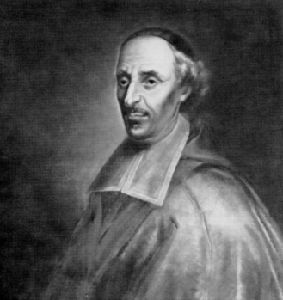
François Laval was born in 1623 into one of the most distinguished families in France. He received the tonsure at age twelve (a symbol of his status as a cleric) and, later, he became a canon of the cathedral of Evreux. Following his ordination in 1647, he was named archdeacon of Evreux. At the age of thirty he was appointed Vicar Apostolic of present-day Vietnam, but he was unable to take up residence there because of the wars that plagued the country during that period; he resigned from that office one year later. In 1658, François was appointed Vicar Apostolic of New France. He arrived in Canada in May 1659, and reached Quebec one month later. During the next thirty years of his life he founded parishes, fought against the exploitation of the Native Americans, and opposed the Gallicanism of the civil authorities. He founded the first seminary in New France in 1662 and in 1674 he was appointed as first bishop of Quebec. François died in 1708 at the age of eighty-five. Saint Fr...

A Season of Enlightenment: The Third Sunday in Ordinary Time

Image
Since many have undertaken to compile a narrative of the events that have been fulfilled among us, just as those who were eyewitnesses from the beginning and ministers of the word have handed them down to us, I too have decided, after investigating everything accurately anew, to write it down in an orderly sequence for you, most excellent Theophilus, so that you may realize the certainty of the teachings you have received. —Luke 1:1-4   “There are three stages of spiritual development: the carnal, the spiritual, and the divine,” an old monk once explained to a novice. “What is the carnal stage?” the novice asked. “That’s the stage,” the old monk said, “when trees are seen as trees and mountains are seen as mountains.” “And the spiritual?” the novice asked eagerly. “That’s when we look more deeply into things. Then trees are no longer trees and mountains are no longer mountains,” the old monk answered. “And the divine?” the novice asked breathlessly. “Ah,” the old monk sa...

Christmas Eve and the Ancestors of Jesus

Image
The birth of Jesus is actually the climax of a story that began in the Garden of Eden and which continues into our own time. Jesus was born into an all-too-human family whose own story is filled with saints and sinners, the faithful and those who fell, and all types in between. And their experiences form an indispensable part of our understanding of who Jesus is and who we are as his followers: these ancestors of Jesus are also our spiritual ancestors and we owe them a debt of thanks.   Pope Francis reminded us of this in his General Audience on June 25, 2014: If we believe, if we know how to pray, if we acknowledge the Lord and can listen to his Word, if we feel him close to us and recognize him in our brothers and sisters, it is because others, before us, lived the faith and then transmitted it to us. We have received faith from our fathers and mothers, from our ancestors, and they have instructed us in it. " The Jesse Tree " from The Capuchins Bible (ca. 1180)...

"Drinking the Cup": The Twenty-Ninth Sunday in Ordinary Time

Image
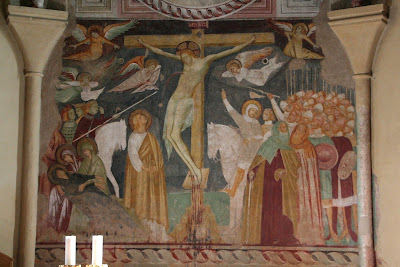
This has been a crazy week. I was in Dallas early in the week providing two workshops on the history and values of the RCIA (from the perspective of discipleship) and, after returning to Los Angeles late Wednesday evening, I led a mini-retreat celebrating Mercy on Thursday evening. I'm grateful that all three events went well and were each was a time of blessing. However, the Church's calendar keeps marching on and, so, I'm happy to share my reflections on this Sunday's Gospel. 14th century Crucifixion from the Abbey of Chiaravalle della Colomba in Alseno, Italy The Church's calendar continues to move forward, however, and I'm happy to share my reflections on this Sunday's Gospel. Jesus lived his life for others, offering everyone he encountered an opportunity for a new kind of relationship with God and with those around him. Everything in the life of Jesus—his friendships, his teachings, and his miracles—were signs of God’s unlimited mercy and c...

The Lesson of Our First Parents: The Twenty-Seventh Sunday in Ordinary Time

Image
Although I'm taking a few days of vacation, I still wanted to share my reflection on this Sunday's Readings, especially as we enter into the Synod on the Family on October 4. The Creation of Eve by Michelangelo in the Sistine Chapel As Pope Francis observed in Saturday’s Festival of Families, however, “Man and woman, through the astuteness of the devil, learned to separate themselves from one another. And all the love that God gave was almost lost. In a brief period of time, the first crimes, the first fratricide, brother killed a brother; the first war.” Damage was done and the beauty and simplicity of that first relationship was lost. But that wasn’t the end of the story. To read the full reflection, click here . And don't forget that you can now follow me on Twitter .

"You Are Not Like Us": The Twenty-Sixth Sunday in Ordinary Time

Image
Below is the link for my reflection on this Sunday's First Reading and Gospel in which I reflect on the Insider/Outsider perspective that is so prevalent in society and in the Church.  St. Anthony the Abbot Our disdain of those who do not think like “we” do—whomever “we” may be—reminds me of a teaching of the great Desert Father, Saint Anthony: “A time is coming when men will go mad, and when they see someone who is not mad, they will attack him saying, ‘You are mad—you are not like us.’” Rather than recognize and welcome diverse perspectives, experiences, and opinions, many of us dig in along the trenches of ideology, political rhetoric, or theological certainty, criticizing and excluding those who “do not follow us.” And whether it is in broader society or within the Church, many seem unwilling—even incapable—of creating spaces of hospitality and dialogue . To read the full reflection, click here .